 MrCards
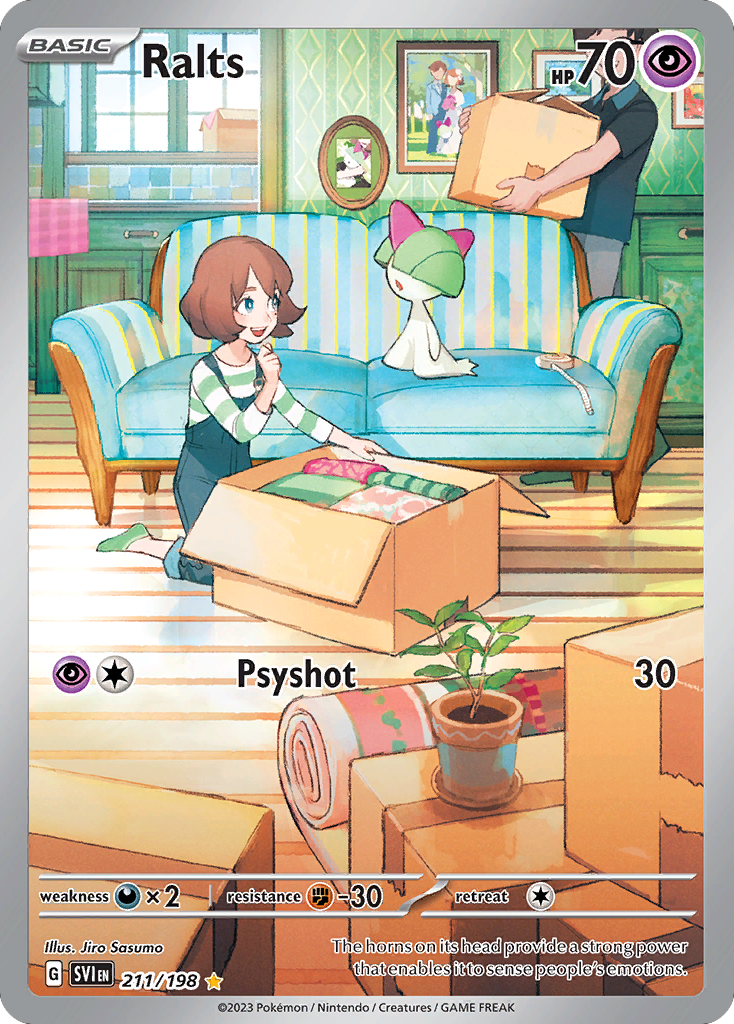
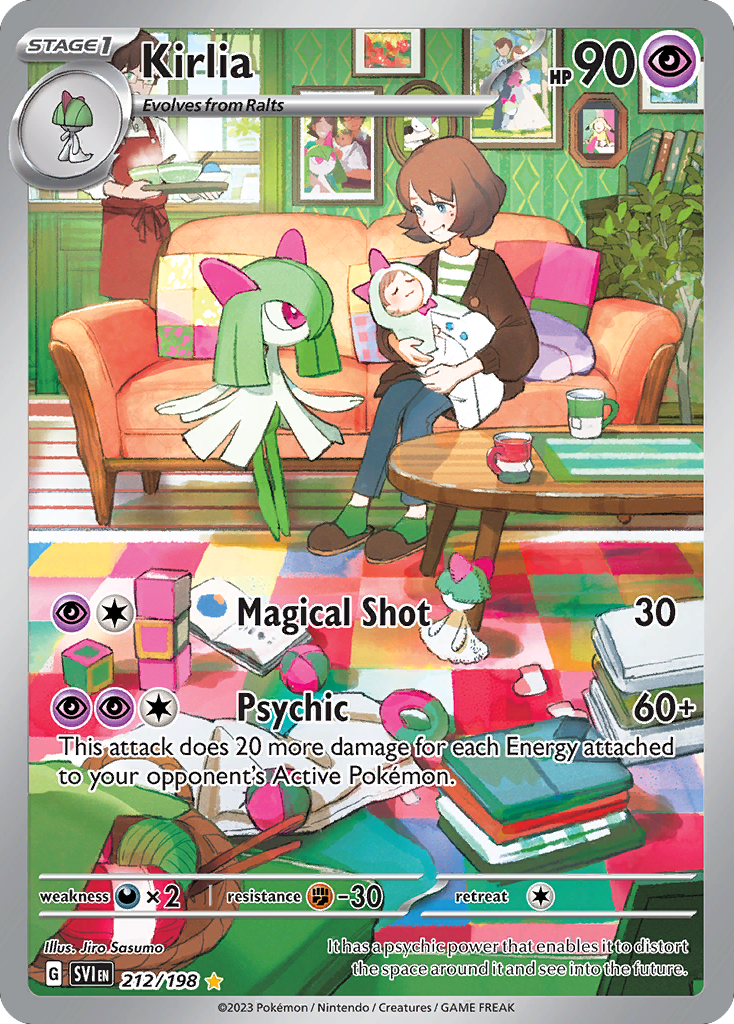
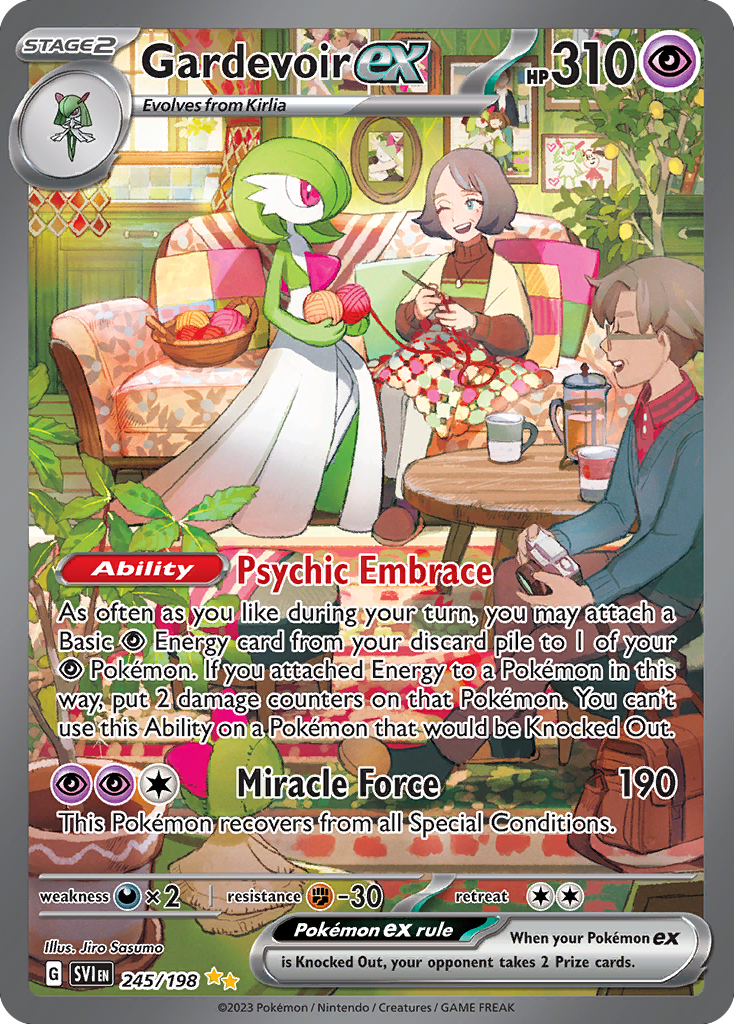
Three cards, one familiar room, and a family whose life keeps moving forward. A woman unpacks boxes beside Ralts. Later, she holds a baby while Kirlia stands nearby. By the final scene, she is older, knitting with Gardevoir beside her.
Each illustration works on its own. Read them in order, though, and the small changes become the point: the belongings spread across the floor, the activity around the table, the photographs collecting on the walls. The Pokémon grows, the people grow older, and an ordinary home becomes the thread connecting them.
Ralts: the beginning of a home
The first scene is full of moving boxes. The woman has opened one in front of the sofa, while another person carries a box across the room. Ralts sits on the cushion, close enough to be part of the unpacking rather than a distant observer.
The folded blanket, small potted plant and rolled rug make the move feel specific. They are belongings waiting to find their place, while Ralts has already settled on the sofa. The room is still being arranged around it.
Ralts’s small size matters to the composition. It occupies a little corner of a much larger human space, surrounded by furniture and possessions. Even so, the woman’s attention brings it into the centre of the scene. Their relationship is already part of what makes this room a home.
Kirlia: the room fills with life
The next card returns to the same patterned walls and window, but the floor now holds toys and books. The woman is seated with a baby in her arms. Kirlia stands beside her, reaching towards the little family group, while another adult appears at the edge of the illustration carrying a tray.
The room feels busier. Mugs and a jug sit on the table; everyday objects compete for space. These details make the change convincing. We are seeing a household in use, with the small interruptions and accumulated belongings that come with it.
Kirlia has changed too. It is taller and more expressive than the Ralts in the first scene, yet it remains close to the woman. Putting the cards together lets the evolution become a visual measure of time alongside the changes in the family.
Gardevoir ex: growing old together
By the third illustration, the woman’s hair is grey. She is knitting, smiling beside Gardevoir, which holds a ball of yarn. An older man reads nearby. The scene is quieter, with the activity gathered around the sofa and table.
The yarn is a lovely connecting detail. It gives the Pokémon a small, useful role in an ordinary afternoon. The illustration presents companionship through something that could easily go unnoticed at first glance: two figures sharing a task and a comfortable space.
The framed pictures behind them bring the earlier scenes back into view. They make the wall feel like a record of a life already lived. The cards leave the precise length of that life open, but the progression from unpacking to raising a family to growing older is clear.
Look at the walls as well as the Pokémon
The repeated room is what makes these separate pictures read as a sequence. Green patterned wallpaper, familiar furniture, the window and family photographs give the eye places to return to. Once you recognise those anchors, the changes become easier to spot.
Try looking through the cards twice. Follow Ralts, Kirlia and Gardevoir first. Then follow the people, pictures and objects around them. A card illustration can reward both a quick glance and that slower second pass.
This is also why the full cards belong beside a discussion of their artwork. The printed evolution labels connect Ralts to Kirlia and Kirlia to Gardevoir ex. The images give that familiar game structure a parallel human story.
Jiro Sasumo’s visual storytelling
All three cards carry Jiro Sasumo’s illustrator credit. Across this sequence, the consistent setting, warm colours and close attention to domestic objects make the family’s changing life feel connected.
Pokémon’s own preview of the expansion identifies Sasumo and describes Gardevoir’s lifelong bond with its Trainer, drawing attention to the family portraits and the related Ralts and Kirlia illustrations. That supports reading the cards together; the individual observations here come from looking closely at the actual artwork.
Sasumo keeps much of the action close to the sofa. Ralts sits on a cushion, Kirlia stands beside the woman, and Gardevoir fills more of the room. Familiar furniture gives us something against which to notice the Pokémon’s growth. The activities around it change from unpacking to caring for a baby to knitting.
The Pokémon behind the story
Ralts, Kirlia and Gardevoir ex form the evolution line printed across these cards: Basic, Stage 1 and Stage 2. Those labels make the reading order clear even before you notice the changing family.
Ralts’s own card text describes how its horns let it sense people’s emotions. Its place beside the woman gives that idea a gentle visual setting. By Gardevoir’s scene, the Pokémon takes an active part in the household, holding yarn as she knits. The evolution line lets the set carry a relationship across three different moments.
Finding the right versions
These English cards come from the original Scarlet & Violet expansion, released on 31 March 2023: Ralts 211/198, Kirlia 212/198 and Gardevoir ex 245/198.
Use those complete numbers when looking up the illustrations. A Pokémon’s name alone can lead to several different cards, and the artwork is the reason these particular versions belong together.
Placed in order, they make a small family album. You can begin with the moving boxes and finish with the knitting, then return to the photographs and notice something you missed. Three cards are enough to leave the impression of a whole life.
Sources and artwork
Artwork: Jiro Sasumo / Pokémon TCG. Card images are the actual, untouched English cards. Pokémon artwork belongs to its respective owners.
- Official Pokémon expansion preview: Pokémon’s official expansion preview
- Ralts 211/198: Official Ralts image
- Kirlia 212/198: Official Kirlia image
- Gardevoir ex 245/198: Official Gardevoir ex image